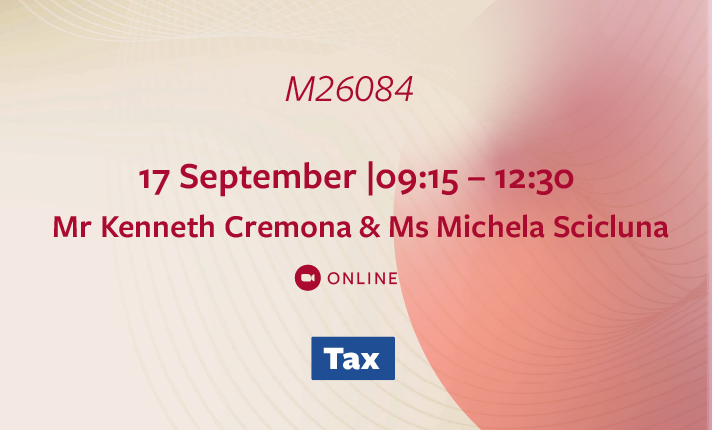
VAT in the Gaming Sector: Addressing Emerging Challenges
The gaming sector has become an important component of Malta’s economy, encompassing a diverse range of activities including online gaming, betting, skill-based platforms and supporting services. As the industry continues to evolve, businesses and advisors are required to navigate a Value Added Tax (VAT) framework that can present unique challenges, particularly where exemptions, cross-border transactions and mixed-use arrangements are involved.
The upcoming VAT in the Gaming Sector session aims to provide participants with a structured overview of the VAT considerations relevant to gaming activities. With changes taking effect from 1 October 2026, it will examine key areas of VAT treatment and highlight issues that are particularly relevant to gaming operators, platform providers and professional advisors. The changes are expected to result in a more clearly defined VAT framework for gaming services while also giving rise to new practical implications for businesses operating within the sector.
One important area is the VAT treatment of gaming transactions and related services. Determining the correct VAT treatment often requires careful consideration of the nature of the services being supplied, the parties involved and the specific circumstances surrounding the transaction. As business models continue to develop and diversify, maintaining a clear understanding of the applicable VAT principles remains a key aspect of compliance and risk management.
Particular attention is often required where businesses operate across multiple jurisdictions. The gaming sector frequently involves participants, suppliers and customers located in different countries, giving rise to questions regarding the place of supply and the interaction of different VAT rules. Understanding how cross-border transactions are treated is therefore essential for businesses seeking to manage their VAT obligations effectively and maintain compliance across various markets.
The treatment and recovery of input VAT also remains a key area of focus. Businesses that make different types of supplies may encounter challenges when determining the extent to which VAT incurred on costs can be recovered. Changes to the scope of VAT exemptions may also have implications for recovery rights and overall VAT positions, making it important for businesses to understand how these rules apply to their particular circumstances. Recent developments relating to the VAT treatment of gaming services have reinforced the relevance of this area for both operators and service providers.
In addition to examining the underlying principles, the session will also consider recent developments and practical case studies that help illustrate how VAT rules can apply in different situations. Practical examples can often provide valuable insight into common challenges encountered by businesses and help translate legislative requirements into real-world scenarios.
Changes in legislation and guidance can have practical consequences for gaming operators and service providers. Keeping abreast of these developments can help businesses assess their VAT position and respond appropriately where adjustments may be required.
Ultimately, a sound understanding of VAT principles remains important for businesses operating within the gaming sector and for the professionals advising them. By strengthening knowledge of gaming-related VAT issues and remaining aware of emerging developments, practitioners can be better equipped to address practical challenges and support effective decision-making.