MoneyVal – The Aftermath
The 5th Round Mutual Evaluation Report on Malta published by MoneyVal analysed the level of effectiveness of Malta’s Anti Money Laundering (AML) and Combating the Financing of Terrorism (CFT) system and sets out a number of recommendations to strengthen Malta’s AML/CFT regime.
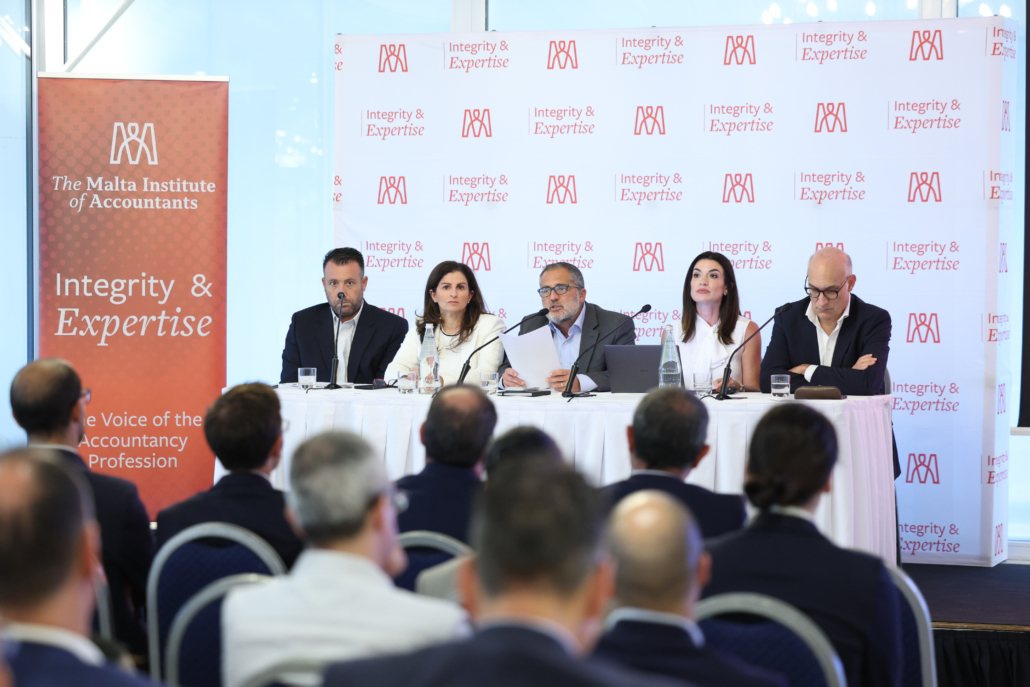
On the 12th of December, the Malta Institute of Accountants (MIA) held a discussion forum relating to the aftermath of the MoneyVal report. A panel consisting of representatives of the banking industry and regulatory authorities discussed the results and replied to questions from the floor. This event was attended by over 200 members. The panel was formed by Ms. Marisa Frendo, MLRO and Compliance Manager of Bank of Valletta plc; Mr. Marcel Cassar, CEO of APS Bank and Chairman of the Malta Bankers Association; Dr. Michael Xuereb, Senior Advisor to the CEO’s Office at MFSA; and Dr. Alex Mangion, Head of the FIAU’s legal unit. The panel was moderated by Mr. Fabio Axisa, the MIA President.
Mr. Fabio Axisa opened the discussion by observing that though the MoneyVal report does not target solely the accountancy profession, it sheds a bad light on the profession in so far as compliance with AML obligations are concerned. He also highlighted the fact that the MIA met with various regulators such as the MFSA, and the Central Bank of Malta as well as with other stakeholders such as the Malta Bankers’ Association (MBA) which all relayed the same message, namely, that the accountancy profession needed to pull up its socks in so far as AML compliance is concerned. It is the objective of the MIA to ensure that its 3,500 members comply with their AML obligations in the best way possible, Mr. Axisa affirmed.
The MIA President observed that the purpose of this discussion forum was to find out the root cause of the MoneyVal comments, to see how others view the accountancy profession and to assess how the profession can improve, listen, learn and move forward.


Besides the various shortcomings at state level, the MoneyVal report dwells on the inefficiencies of designated non-financial businesses and professions (DNFBPs). DNFBS includes the accountancy profession, trust and company service providers, legal professionals and real estate agents, all of which have been designated in the report as being particularly vulnerable to money laundering.
The MoneyVal report highlighted the following points:
1) Some DNFBPs including accountants were unable to clearly articulate how money laundering might occur within their institution or sector.
2) Some non-bank Financial Institutions (FIs) and DNFBPs have not filed any suspicious transaction reports (STRs) nor identified any suspicious transactions internally. Most DNFBPs were unable to elaborate on typologies, transactions or activities that would give rise to an STR, particularly in relation to Financing of Terrorism (FT).
3) Problems related to ML/FT reporting, including the number of STRs, suggest that there might be problems with the overall understanding of the risks among the subject persons.
4) The majority of DNFBPs expressed the view that their businesses are unlikely to be vulnerable to Money Laundering (ML) or FT. This is in direct contrast to the communicated findings of the National Risk Assessment (NRA).
5) Accountants were unable to clearly articulate how “control” is determined in relation to beneficial ownership of legal persons and arrangements.
6) Several DNFBPs were not aware at all offreezing or reporting obligationsstating that they would simply refuse the transaction or exit the customer relationship.
7) Most FIs implement daily or, in some cases, weekly screening of client and UBO databases against UN and EU lists, with the notable exception of some investment firms. Regular screening was not a consistent feature of DNFBPs’ procedures, with some accountants, trustees, company service providers and insurance agents indicating that this was undertaken as part of regular client reviews, which could be up to 2 years or more after take-on of the client. This raises concerns that existing customers who become subject of Targeted Financial Sanctions (TFS) may not be identified in a timely manner.
8) Although certain banks demonstrated advanced awareness of the importance of transaction monitoring to detect possible sanction evasions, this was not conducted by some smaller FIs and most of the DNFBPs.
9) Most FIs and DNFBPs were reliant on commercially provided sanctions lists and several DNFBPs were unaware of any sanction lists or other material being provided by Maltese authorities.
The discussion revolved around these three main aspectsidentified by the moderator at the outset of the forum:
1) The root cause of the MoneyVal comments
The MoneyVal evaluators criticised the FIAU, the country’s ability to investigate crime, as well as the sectors’ ability to prevent money laundering and funding of tourism cases. The panellists argued how the country, as well as all subject persons must take stock of these issues and implement the necessary recommendations to tackle them. The way forward is improving policies, procedures and supervisory visits.
It was observed that there are number of concerns specifically related to the activity of detecting suspicious and dubious transactions. The root cause is the issue of understanding the risks. As practitioners and supervisors, accountants must be aware of the risks which they might face in order to be in a position to detect suspicious and dubious transactions when they arise.
It was noted that although the total number of STRs has been growing steadily over the period 2013-2018, there are generally low reporting rates across the sector compared to the inherent risks of thee sector.
Accountancy professionals have submitted 3 STRs in 2013, 2 in 2014, 4 in 2015 and 7 in 2018. There were 1,193 STRs submitted in the first 10 months of 2018, only 7 of which were done by accountancy professionals.